The hardest part of getting fit after 50 is not the training. It is not the diet. It is not the sore muscles or the early mornings or the discipline required to keep going. The hardest part is starting — and specifically, getting from the point where you know you should start to the point where you actually do. This article is about that gap, and how to close it.
Why Motivation Is the Wrong Starting Point
Here's the thing about motivation that most fitness content gets backwards: waiting until you feel motivated to start is a strategy that reliably doesn't work. Motivation is inconsistent, unreliable and deeply susceptible to mood, weather, tiredness and every other variable that fluctuates from day to day. If you wait to feel motivated, you will wait for a long time.
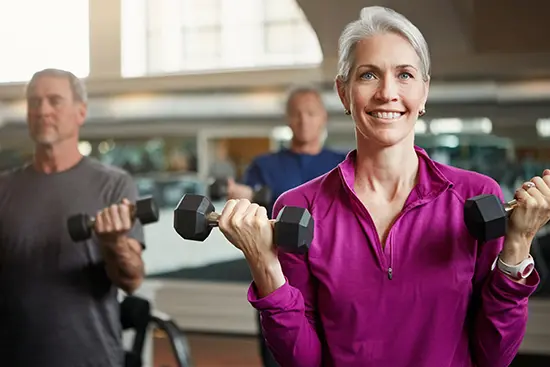
What actually works is action first, motivation second. The motivation to keep training doesn't arrive before you start — it builds as a result of starting. The first session is rarely a moment of transcendence. It's usually awkward, harder than expected and slightly uncomfortable. The second is a little easier. By the fourth or fifth, something starts to shift. You start to notice strength. You notice energy. You notice that you feel better on the days you've trained than on the days you haven't. That's where motivation comes from — and you can only get there by going first.
Find Your Actual Reason
Abstract motivations — "I should be healthier," "I need to lose weight," "my doctor told me to exercise more" — are weak fuel. They're correct, they're reasonable, and they don't get most people out of bed on a cold Tuesday morning in February.
What works is a reason that is specific, personal and connected to something you actually care about. Not "I want to be healthier" but the thing that being healthier makes possible. Not "I should lose weight" but the specific version of yourself you want to be — the person who can move without pain, who looks good without a shirt on, who can keep up with grandchildren, who feels strong and capable and genuinely well.
Take a moment and think about what that actually is for you. Write it down if it helps. The clearer and more specific your reason is, the more durable it is when the initial enthusiasm fades — and it always fades eventually. What keeps people going for years is not the excitement of starting. It's the clarity of knowing why.
"You don't have to feel ready. You don't have to feel motivated. You just have to show up. The rest follows from showing up."
The Excuses Are Real — And They're Not the Problem
The most common reasons people over 50 give for not starting — or not continuing — with fitness:
I don't have time. Almost everyone over 50 who trains consistently has a full life — work, family, responsibilities. Three 45-minute sessions per week is two and a quarter hours out of 168. It is not a time problem. It is a priority problem, and priority is a choice.
I'm too old to start now. You are not. The physiology of adaptation doesn't switch off at 50 or 60. People make significant physical improvements in their 70s and 80s. The only age at which it is genuinely too late is an age you have not reached yet.
I'll get injured. This is a real concern, and it deserves a real answer: the risk of injury from well-structured training is significantly lower than the long-term health risks of not training. Muscle loss, bone density decline, metabolic dysfunction, cardiovascular deterioration — these are the consequences of inactivity. Starting carefully, progressing gradually and training intelligently is not dangerous. It is protective.
I don't know where to start. This one is solvable right now. The beginner's weight training guide gives you everything you need to start training today. If you've never trained with weights before, start there. If a class environment appeals, the kickboxing guide explains exactly what to expect from a first class.
I tried before and it didn't stick. That's information, not a verdict. It means the previous approach didn't suit you, not that exercise doesn't work for you. Different formats, different times of day, different training partners, different goals — any of these variables can change the outcome completely.
Start Smaller Than Feels Meaningful
One of the most reliable ways to fail at building a training habit is to start with a programme that is too demanding to sustain. Three sessions a week at high intensity, strict nutrition, no rest days — it looks like commitment. It usually lasts two to three weeks before life gets in the way, the soreness becomes discouraging, and the whole thing quietly collapses.
A more reliable approach: start with something so manageable that skipping it would feel ridiculous. Two sessions a week. Thirty minutes each. Low intensity. The goal in the first month is not fitness — it is the habit. Fitness comes from consistent training over months and years. The habit is the foundation everything is built on, and it needs to be established before intensity or volume is added on top of it.
Two sessions becomes three. Thirty minutes becomes forty-five. Light weights become heavier ones. This is how it actually works for the vast majority of people who successfully transform their fitness after 50 — not through a dramatic overhaul but through a gradual accumulation of consistent effort.
Identity Over Willpower
Willpower is a limited resource. It depletes throughout the day, it's affected by sleep and stress, and relying on it as the primary driver of consistent training is not a reliable strategy. What works better is identity.
The difference between "I'm trying to exercise more" and "I'm someone who trains" is significant. One is a behaviour you're attempting. The other is a description of who you are. When training is part of your identity rather than a task on your to-do list, the decision of whether to go is different. You go because that's what you do. The question is not whether but when.
This identity shift doesn't happen overnight. It builds session by session, week by week, through consistently showing up until training stops being something you're trying to do and becomes simply something you do. Most people who train consistently find that after three to four months, the idea of not training feels strange. That's the point you're building toward.
What You're Actually Capable Of
The gap between what most people over 50 think they are capable of and what they are actually capable of is large. The cultural messaging around ageing in the context of fitness is predominantly about limitation — what you should be careful of, what you shouldn't push too hard, what isn't realistic anymore. It is, in most cases, wrong.
The research on physical adaptation in older adults is consistently more optimistic than the cultural narrative. Significant muscle growth in people in their 70s. Cardiovascular improvements in their 80s. Bone density restoration through resistance training. The body's capacity to respond to the right stimulus doesn't disappear with age — it just requires a bit more patience and a bit more intelligence in how the stimulus is applied.
The people you see who are genuinely fit and strong in their 50s, 60s and beyond didn't get there through genetics or luck. They got there through consistent training over time. The same is available to you. The only difference between where you are and where you could be is time and effort — and you have both.
Where to Go From Here
If this is the point where you decide to start, here's a clear path. Begin with the beginner's weight training guide — it takes you from zero to a working three-day programme with no prior experience required. If fat loss is part of the goal, read the belly fat article alongside it for the nutrition context that makes the training produce results. If you want something more social and more varied, the kickboxing guide walks you through finding a club and what to expect on day one.
Pick one. Start this week. Not when the timing is better — the timing is never perfect. Now.
Frequently Asked Questions
Find a reason that is personal and specific rather than abstract. Not "I should be healthier" but something concrete — a physical goal, an activity you want to return to, a version of yourself you want to be. Motivation that comes from inside is far more durable than motivation based on obligation. Start smaller than feels meaningful, build the habit first, and let the results become the motivation that sustains it.
No. There is no age at which it is too late to begin improving your fitness, building muscle, losing fat, or significantly changing how you feel and look. The physiology of adaptation does not switch off at 50 or 60 or 70. What changes is the time frame and the approach — both are manageable. The only thing that actually makes it too late is not starting.
Start smaller than feels necessary. The goal in the first two to four weeks is not to get fit — it's to establish the habit of showing up. Two or three short sessions per week, manageable effort, no pressure to push hard. Once training is simply what you do on those days, intensity and volume can gradually increase. The habit is the foundation; everything else is built on top of it.
Unlimited Fitness Ireland
Ireland's fitness resource for the over 50s. We cover strength training, martial arts, motivation and nutrition — because your best training years might still be ahead of you. Age is not a factor.
Related Articles

Sources & Further Reading
Ryan, R.M., & Deci, E.L. (2000). Self-Determination Theory and the Facilitation of Intrinsic Motivation, Social Development, and Well-Being. American Psychologist. View on PubMed ↗
Netz, Y., et al. (2005). Physical Activity and Psychological Well-Being in Advanced Age: A Meta-Analysis of Intervention Studies. Psychology and Aging. View on PubMed ↗