There's a lot of fitness advice aimed at women over 50 that sets the bar far too low — light resistance bands, gentle stretching, low-impact everything. You're capable of far more than that, and the research backs it up. This guide cuts through the noise and focuses on what actually works: real training, real results, and a programme built around what your body needs right now.
What Changes After 50 — And Why It Matters for Training
The hormonal shifts of perimenopause and menopause have a direct and significant impact on body composition. Declining oestrogen causes the body to redistribute fat toward the abdomen and away from the hips and thighs. Muscle mass begins to decline more rapidly — a process called sarcopenia — slowing the resting metabolism and making fat gain easier and fat loss harder. Bone density decreases, raising the long-term risk of osteoporosis and fracture. Sleep often deteriorates. Energy fluctuates.
None of this is inevitable or irreversible. But the training approach that addresses it effectively is not the one that most women over 50 are being pointed toward. Gentle movement has its place — but it doesn't rebuild muscle, restore metabolism or protect bone density. Strength training does all three.
Why Strength Training Is Non-Negotiable
The single most important thing a woman over 50 can do for her health, body composition and long-term physical independence is lift weights. Not light weights with high reps in a circuit. Progressive resistance training with weights that actually challenge the muscles to adapt.
The research is unambiguous. Resistance training increases muscle mass, improves bone mineral density, boosts resting metabolic rate, reduces visceral fat, improves insulin sensitivity and reduces the severity of menopausal symptoms. A 2018 review published in the Journal of Bone Metabolism found that resistance training produced significant improvements in bone mineral density in postmenopausal women — one of the most effective non-pharmaceutical interventions available for osteoporosis prevention.
The fear that lifting weights will make women look bulky is not supported by physiology. Women have significantly lower testosterone levels than men, which is the primary driver of large muscle hypertrophy. What strength training produces in most women is a leaner, more defined physique — less body fat, more visible muscle tone, better posture and a body that moves well and feels capable.
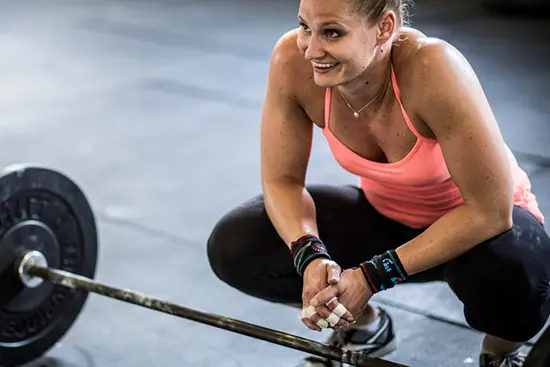
The Best Exercises for Women Over 50
Build your programme around compound movements that work multiple muscle groups at once. These are the exercises that deliver the most benefit in the least time and produce the hormonal and metabolic response that drives results.
- Squat or goblet squat: Lower body strength, glutes, quads, core. Essential for functional movement and one of the best exercises for overall body composition.
- Romanian deadlift: Hamstrings, glutes, lower back. Builds the posterior chain that is often underdeveloped and directly reduces lower back pain.
- Dumbbell press (flat or incline): Chest, shoulders and triceps. More joint-friendly than a barbell and easy to progress at home or in the gym.
- Bent-over or seated row: Upper back and biceps. Critical for posture — the rounded shoulders that come from years of desk work and phone use are directly addressable with consistent pulling work.
- Hip thrust or glute bridge: One of the best glute-specific exercises available and particularly valuable for women, developing strength and shape in an area that tends to weaken significantly with inactivity.
- Overhead press: Shoulders and upper body strength. Start light and build — shoulder mobility often needs time to improve.
- Plank and dead bug: Core stability and lower back protection. These should be in every session.
Interval Training — The Cardio That Actually Works
Long, slow cardio sessions have their place for general health and stress management — but as a primary fat-loss tool after 50 they consistently underdeliver. The body adapts quickly, the calorie burn is modest, and unlike strength training they do nothing to address muscle loss or metabolic decline.
Interval training — alternating between periods of higher effort and recovery — produces significantly better outcomes for fat loss and cardiovascular fitness in less time. Two sessions of 20–30 minutes per week alongside your strength training is enough. This can be cycling, rowing, a circuit of bodyweight exercises, kettlebell work, or simply brisk walking intervals on a incline. The format matters less than the effort level.
Flexibility, Mobility and Recovery
Flexibility and mobility work — yoga, Pilates, stretching — genuinely supports health and quality of life after 50. Hip mobility, thoracic rotation, hamstring flexibility and shoulder range of motion all deteriorate without deliberate attention and all have a direct impact on how well you move and how you feel day to day.
The important distinction is that flexibility work should complement your strength training, not replace it. A weekly yoga session and five minutes of stretching after each strength session is excellent practice. A weekly yoga session instead of strength training is not the same thing and does not produce the same outcomes.
Exercise and Menopause — What the Research Shows
The relationship between regular exercise and menopausal symptom severity is well established in the research. A systematic review published in Maturitas found that physically active women reported significantly lower incidence and severity of hot flushes, mood disturbance, sleep problems and fatigue than sedentary women. The mechanism is partly hormonal — exercise supports the body's regulation of the systems disrupted by declining oestrogen — and partly through the direct improvements in sleep quality, stress levels and body composition that training produces.
This is not a cure for menopausal symptoms, and it does not replace medical advice. But it is a genuine and meaningful tool that is underused by most women navigating this period, largely because the fitness content they're exposed to doesn't take them seriously enough to tell them.
"The training that will serve you best after 50 is not easier than it was at 30. It's smarter — better structured, better recovered, and built around what your body actually needs."
A Sample Weekly Training Plan
Three to four sessions per week is the sweet spot for most women over 50. Here's a structure that works:
- Monday — Full body strength: Goblet squat, Romanian deadlift, dumbbell press, bent-over row, plank. 3 sets × 10 reps.
- Wednesday — Interval session: 20–25 minutes. Cycle, row, or bodyweight circuit. Work hard for 30 seconds, rest for 45, repeat.
- Friday — Full body strength: Hip thrust, overhead press, incline dumbbell press, seated row, dead bug. 3 sets × 10 reps.
- Saturday or Sunday — Active recovery: 30–45 minute walk, yoga or gentle mobility session.
If four sessions feels like too much initially, start with two strength sessions and one interval session and build from there. The beginner's weight training guide covers everything you need to get started from scratch. For the nutrition side that supports this training — particularly important if fat loss is part of the goal — the belly fat article covers it in detail.
Frequently Asked Questions
Yes — lifting weights that actually challenge you is one of the most beneficial things a woman over 50 can do. Heavy, progressive resistance training builds muscle, improves bone density, boosts metabolism and reduces the risk of osteoporosis. The fear of becoming bulky is unfounded — women do not have the testosterone levels required to build large muscle mass from standard weight training.
Compound strength training is the single most valuable form of exercise for women over 50, addressing muscle loss, bone density, metabolism and body composition simultaneously. Combined with two sessions of interval or circuit work per week and consistent daily movement, it forms the most effective overall programme. Flexibility and mobility work supports recovery and joint health as a complement, not a substitute.
Three to four sessions per week is optimal for most women over 50. Two to three of these should be strength training sessions, with one to two interval or cardio sessions. Recovery is more important after 50, so training every day at high intensity is counterproductive. Consistent, well-recovered training outperforms more frequent sessions with insufficient rest.
Research consistently shows that regular exercise — particularly strength training and aerobic work — reduces the severity of a range of menopausal symptoms including hot flushes, mood changes, sleep disruption and fatigue. It also directly addresses the hormonal changes that cause muscle loss and fat redistribution during and after menopause.
Unlimited Fitness Ireland
Ireland's fitness resource for the over 50s. We cover strength training, martial arts, motivation and nutrition — because your best training years might still be ahead of you. Age is not a factor.
Related Articles
Sources & Further Reading
Borde, R., et al. (2015). Dose-Response Relationships of Resistance Training in Healthy Old Adults: A Systematic Review and Meta-Analysis. Gerontology. View on PubMed ↗
Hong, A.R., & Kim, S.W. (2018). Effects of Resistance Exercise on Bone Health. Endocrinology and Metabolism. View on PubMed ↗
Daley, A., et al. (2015). Exercise for Vasomotor Menopausal Symptoms — Cochrane Review. Maturitas. View on PubMed ↗